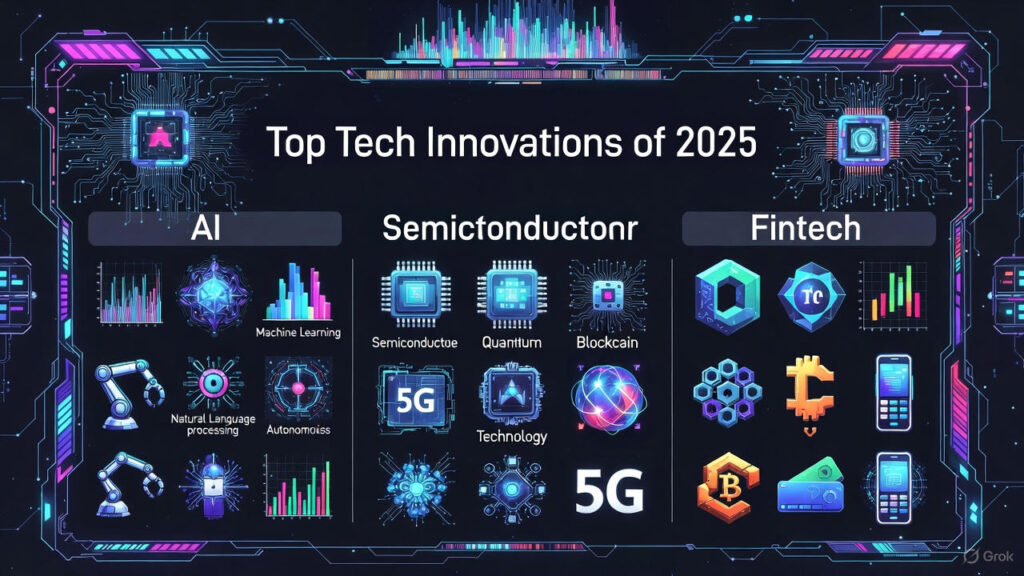
Top Tech Innovations of 2025
The year 2025 has already become one of the most exciting periods in modern technology. From major advances in artificial intelligence to groundbreaking improvements in smartphones, laptops, robotics and connectivity, the world is moving toward a future where technology blends seamlessly with everyday life.
In this in-depth article, we explore the top tech innovations of 2025 that are shaping industries, transforming homes and redefining how humans interact with machines.
AI Becomes More Human-Like and Practical
Artificial Intelligence is easily the most influential technology of 2025. Instead of simply responding to commands, AI systems now understand context much better and can reason through tasks the way a human assistant might. Whether someone uses AI for writing, learning, coding, design or customer support, the new generation of models feels more aware, faster and far more intuitive.
One of the most noticeable changes is how AI is now deeply integrated into productivity apps. People no longer need to spend hours editing videos, designing graphics or writing long documents. With smarter AI, complex tasks that once took days can now be completed in minutes. AI tutors, too, are reshaping education by analyzing a student’s learning style and adapting lessons accordingly. This blend of personalization and automation shows how AI is no longer just a tool—it is becoming a true digital partner.
Smartphones Reach a New Level of Power
Smartphone technology also takes a significant leap in 2025. Cameras are larger and more intelligent, often assisted by AI that improves color accuracy, lighting and stabilization in real time. Even budget phones now offer premium-level results, making high-quality photography accessible to more people.
Performance is another area that sees rapid improvement. New chipsets built on 4nm and 3nm architecture allow phones to deliver console-like gaming performance while using less power. Charging technology has become unbelievably fast, with some devices going from zero to full battery in under ten minutes. Foldable phones—once considered a luxury—are finally becoming more affordable, allowing more users to enjoy the flexibility of a larger screen without carrying a bulky device.
Apps and Software Evolve with Smarter Automation
Software is moving in the same direction as hardware—toward intelligence and user-centered automation. Many of today’s popular apps combine AI with traditional features, creating faster workflows and improved experiences.
Productivity apps can now draft emails, summarize documents, organize schedules and generate creative content with just a few inputs. Security apps have also become more advanced, using biometric identification and AI monitoring to detect threats before they become serious. People who rely on multiple devices appreciate how quickly modern apps sync data across phones, tablets and computers, making it easier to continue work anywhere.
AI, Robotics and Home Automation Enter the Mainstream
Home technology has made significant progress, especially in terms of automation and robotics. More houses now feature intelligent cleaning robots, voice-controlled lighting, automated climate control and smart appliances that track inventory and suggest shopping lists.
These systems are designed not only to perform routine tasks but also to understand user habits. For example, refrigerators can now monitor food expiry dates, while home assistants can adjust lighting based on time of day or suggest activities based on calendar schedules. This level of prediction makes life more comfortable and efficient.
Connectivity Goes Beyond 5G
5G coverage is expanding quickly, but 2025 also marks the beginning of early 6G testing. This next generation promises even faster speeds, lower latency and more stable connections. Rural regions benefit the most from the growth of satellite internet, which provides strong connectivity where traditional networks struggle.
The technological landscape of 2025 demonstrates how deeply innovation is shaping the modern world. From smarter AI and powerful smartphones to intelligent homes, advanced healthcare and next-generation connectivity, every technology is aimed at simplifying lives and empowering people. The future will only accelerate these transformations, opening doors to new possibilities we once thought were decades away.