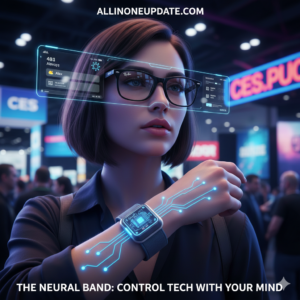
The mixed-reality industry is shifting rapidly — and Apple is preparing to make its biggest leap yet. The upcoming Apple Vision Pro 2, expected in late 2025, is rumored to move beyond hand-tracking and eye-tracking into fully AI-powered predictive interaction, enabling users to control apps and environments without gestures or screens.
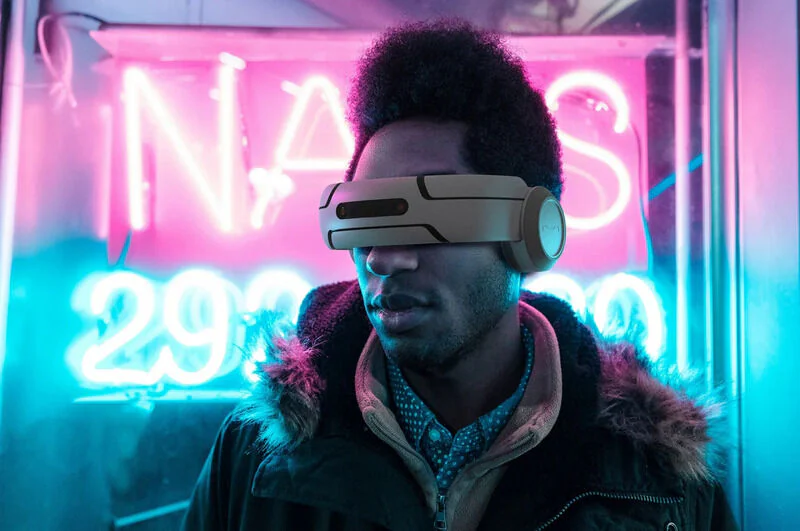
What’s New in Vision Pro 2
The next-gen headset is expected to include:
| Feature | Upgrade |
|---|---|
| Interaction | Predictive AI control (no gestures required) |
| Display | 30% brighter micro-OLED with deeper contrast |
| Battery | 3X longer single-charge battery life |
| Comfort | 18% lighter frame for long-time wearing |
| Apps | New “AI Spatial Apps” ecosystem |
The predictive AI control system analyzes gaze direction, body posture, and intent using neural processing — making the interface feel “thought-driven” rather than touch-driven.
How Predictive AI Changes the Experience
Instead of selecting apps manually, the headset learns patterns:
- Think about opening Netflix → It opens
- Look toward a virtual object → It highlights automatically
- Intend to drag a window → It moves where you expect
- Want to take a photo → It activates the camera with no motion
Apple’s goal is zero-friction computing, where the digital world blends organically into real life.
What It Means For the Future
Vision Pro 2 isn’t just another headset — it’s a new era of personal computing:
🔹 Work without monitors
🔹 Travel virtually without leaving home
🔹 Create 3D content in real space
🔹 Replace laptops for many users
Experts already call it “the first step toward thought-based interaction tech.”
Conclusion
With the Vision Pro 2, Apple is not just improving hardware — it’s pioneering how humans interact with computers. If AI-powered spatial computing becomes mainstream, this may define the next 10 years of technology, just like smartphones did in the 2010s.